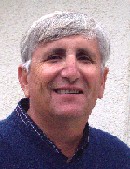
Ben Durskin is nine years old. For almost four years, he has been
treated for acute lympho | blastic leukemia. During a punishing protocol
of chemotherapy, he passed the time with his Game Boy and Play
Station. Last summer, Ben came up with his own videogame, designed
especially for kids with cancer. In Ben’s Game, a boy (modeled after
Ben) zooms around a screen on a skateboard, blasting cancer cells in
order to collect “shields” that protect against the usual side effect of
chemo: fever, chicken pox, colds, vomiting, hair loss. A player can’t
lose – “you just keep fighting,” explains Ben.
The Make-A-Wish Foundation and software engineer Eric
Johnston of LucasFilms worked with Ben to create the game. Ben’s
Game has won raves from the 200,000 children who have found the
game, available free on line. Not only is the game fun but children learn
about the “monsters” attacking their bodies and how they can best beat
them.
For eight years, 15-year-old Sasha Bowers and her family were homeless. Sasha, her little sister and her mother spent most nights in Columbus, Ohio, shelter, fighting hunger and bugs and kept awake by
snores and screaming. Two years ago, Sasha’s mom landed a job with a
cleaning company and the family was able to move into an apartment.
But Sasha hasn’t forgotten where she came from. She’s been the
driving force behind a summer day-camp program for 175 homeless kids
in Columbus. “When I was in shelters, there were no safe places to
play,” Sasha explains. “I wanted to create a place that was fun, where
kids could stay out of trouble while parents find jobs and housing.”
When Ryan Hreljac was in the first grade, he was shocked to learn
about African children having to walk five miles to get a bucket of clean
water. Ryan did odd jobs around the house and for neighbors for four
months to raise $70, the cost of digging a well.
That was six years ago. Since then the Canadian teen’s
foundation, Ryan’s Well, has raised $750,000 to build wells in seven
African nations. Relief and development agencies in Canada say of
Ryan: “He’s such a regular kid – that’s what makes him so powerful…
He believes everyone should have water, and he’s not going to stop until they do.” These remarkable young people, Ben, Sasha, and Ryan possess the
faith of the mustard seed: they have taken their own “Mustard seeds” –
seeds of creativity, empathy and dedication – and have done the hard
work of planting and nurturing those seeds until each one has realized an
enduring and rooted harvest of hope, of compassion, of life itself. Christ
calls us to embrace “mustard seed” faith – to believe that even the
slightest act of goodness, done in faith and trust in God’s presence, has
meaning in the reign of God. The mustard seed challenges us to grab
hold of the opportunities we have for planting and reaping a harvest of
justice, compassion and reconciliation in our own piece of the earth.
Ben, Sasha and Ryan – remarkable young people – they planted
their tiny mustard seed, worked hard, and God did the rest.
You, you, you, all of you, remarkable people. Plant your tiny
mustard seeds wherever you find yourself in life, work hard and let God
do the rest. Mustard seed faith – to believe that even the smallest act of
goodness, kindness, done in faith and trust in God’s power, can have an unbelievable effect on many, many people. Please, don’t sell yourself
short – don’t sell the power of God short!
Archive for the ‘Cycle B’ Category
Mustard Seed Faith 6-13-2021
Sunday, June 13th, 2021Become What You Receive 6-6-2021
Sunday, June 6th, 2021In the November 1998 issue of Food & Wine magazine, writer
Gerri Hirshey tells the story of her grandmother’s “special ministry” to
her family:
“As a child, I often watched my tiny Italian grandmother,
Geraldine, board a city bus cradling a mason jar of hot minestrone. This
meant that someone – Uncle Carmine, Aunt Antoinette – was down. It
didn’t matter whether they were felled by the flu, a feisty gallbladder or
the evil eye. Having heard the alarm, Nonnie (our name for grandma)
tied on an apron and started banging soup pots.
“For nearly half a century, Nonnie was the Designated Soup
Carrier (DSC) for a sprawling Neapolitan network of family and friends
in Stamford, CT. Somewhere between a field medic and a shrink, a
DSC is found in many cultures and is usually female. In the midst of
crisis, her prescriptives are basic and sustaining: Stop a minute. Taste
this. Life is good.” Nonnie’s daughter Rose – Gerri’s mother – eventually became the
DSC for her brothers and sisters and their families; now, granddaughter
Gerri has assumed the duties of DSC for her generation. The Designated
Soup Carrier’s in Gerri Hirshey’s family model Jesus’ vision for the
Sacrament of the Eucharist. Nourished and sustained by the food we
have received, we become nourishment and sustenance for others. Out
of love, Christ gives us himself in bread and asks us to become, in our
love, bread for others – Designated Christ Carriers (DCC).
Here are several examples:
A. He was old, tired, and sweaty, pushing his homemade cart;
stopping now and then to poke around somebody’s garbage. I
wanted to tell him about Eucharist, but the look in his eyes, the
despair in his face, told me to forget it, so, I smiled and I said
“Hi” and I gave him Eucharist.
B. She lived alone, her husband dead, her family gone, as she
talked at you – not to you, words, endless words. So I listened
and gave her Eucharist. C. He sat across my desk – very nervous. He finally said it, “I
have AIDS” – by God’s grace, I did not say, how did you get
AIDS?” – I said “How can I help?” I gave him Eucharist.
I close:
As you, as we – say our Amen today at communion time – let us
remember and take to heart these words – “We receive Eucharist – to
become Eucharist for others. Let us remember and take to heart this
challenge – the work of proclaiming God’s reconciling love belongs to
every one of us, whether we collect taxes, teach math, manage a Fortune
500 company or shine shoes for a living – may we possess the greatness
of spirit and generosity of heart to be ministers of the Gospel –
Designated Christ Carriers, in whatever place we are in, whatever time
God has given us. Amen. “We receive Eucharist – to become Eucharist
for others.”
Trinity Sunday 5-30-2021
Sunday, May 30th, 2021The people who ask the most questions about God are children and
theologians – and their questions are surprisingly similar. Does God
exist? Where does He live? What does He look like? Where did He
come from and how does He spend His “time”? The search never stops.
When one inquiry is answered, it usually triggers others.
Actually, the deep mysteries of religion are not answered but only
commented on. Even Jesus didn’t give direct responses most of the
time. He replied with a story, a parable, or a comment. “What is the
Kingdom?” they asked, and He responded, “It’s a net full of fish.”
“How about the Church, what is it?” “A mustard seed.” “How can you
tell if a person is wise or foolish?” “One builds a house on rock, the
other on sand.” These are not complete answers but enlightening
comments designed to make people think Trinity Sunday presents us with some real puzzlers. Can you
explain the Holy Trinity? No! But we can make a comment: it’s like a
triangle, a shamrock or something that is three and yet one.
Religion is well supplied with a multitude of unfolding mysteries
of which the Trinity is only one – a major one. It’s no real
accomplishment to ask a question which perplexes the experts, for we
have millions more good questions than good answers. People often
think that the priest, bishop or pope, is the “answer man.” Not so.
These persons are expected to have some penetrating insights, but
basically they cannot answer religious mysteries. Their best response is
to make an intelligent comment in the form of a symbol, story or
perhaps a simple act of faith.
The mysteries of religion are not the kind which are waiting to be
solved. Rather, they are to continue as mysteries and be acknowledged
and appreciated. The Trinity is saying something to us about God’s
inmost nature. Although it is beyond human explanation, we will have
our own “answers” but they will all be incomplete. God is too big and complicated for our little minds to grasp completely. But even though
He cannot be fully explained, we can always admire and believe God.
On a more down to earth level.
A high school teacher was talking to her students about the Trinity.
After her presentation she gave her class a writing assignment on this
question: “Which person of the Trinity do you relate to best at this time
in your life?”
I’d like to share with you three student answers to that question.
One boy wrote:
“My father and I have a zero relationship. I need a father right
now, and since I can’t turn to my own dad, I turn to my Father in
heaven. I sometimes talk to him about my problems, the way I would
like to talk to my dad about them.”
One girl wrote:
“My brother lives with my father, and I live with my mother. Ever
since my parents’ divorce two years ago, we hardly ever see each other
anymore. I never thought I’d miss my brother, but I do. So now I’ve kind of adopted Jesus as a brother.” Finally another boy wrote:
“Just recently I began praying to the Holy Spirit. I’m going to
college in a year, and I have no idea what I want to take up. I hope the
Holy Spirit will enlighten me. Anyway, I’m praying to him for
guidance.”
I find those comments refreshingly honest. I also find that they
make me ask myself, “Which person of the Trinity do I relate to best?”
I close.
God, you are profound in your mystery, and you never cease to
amaze me; I sometimes come to think that I have you figured out, and
then you zap me, and remind me that you are beyond the limitations of
my insight.
As I search for the words, titles, songs and images that attempt to
corner you, help me to know that you are beyond my words, deeper than
any effort to be “inclusive,” because what really matters, is that you
exist and that I see you present in your creation.Amen.